
(This article was written as a memoir in memory of the late E.A. Aristides Katoppo in commemoration of the second anniversary of the Senad Foundation on November 6, 2021, which is celebrated today, November 11, 2021, at KeKini Ruang Bersama, Cikini, Central Jakarta).
"Juk, if I set up an advertising agency here, would you like to run it or not?" Maesa Samola asked me one day at the Starbucks Coffee outlet located in the yard of her office, Graha Pena, Surabaya. This question became the beginning of Maesa's story about the need to improve the visual insight of the people of East Java. Of course, his complaints are connected with how the hegemony of the "Indonesian advertising industry" is centered in Jakarta. Why is it called hegemonic? According to Maesa, the centralization of the industry often experiences a fundamental perspective bias, namely the assumption that Jakarta represents Indonesia. Although sometimes the issue of perspective bias is usually around the realm of aesthetic production, aesthetic production in mass communication inevitably leads to problems in Indonesia's political economy and socio-culture. But, of course, complicated and not finished with beautiful visuals alone. Significantly when the visual processing departs from wrong assumptions. Wrong about Indonesia and its people.
During the conversation, Maesa also said that a person named Aristides Katoppo approached her one day and said, "Maesa, it's time for you to make a kind of Salihara in Surabaya. You just have to find a partner from the cultural environment, someone who will play a role like Gunawan Mohammad in Salihara." That's roughly what Maesa said, imitating what Aristides Katoppo told her. "Would you like it or not, Juk? If you want, let's start planning from now on," Maesa said to me. Who wouldn't, I thought. However, this means that a more extended discussion needs to be carried out again. After exchanging information and ideas for a long time, the two of us have successfully completed the concept of an artspace – or art space – which we named SUB Space. SUB is the standard abbreviation code for Juanda International Airport in Surabaya, published by IATA (International Air Transport Association). Conceptually, SUB Space is an alternative space that provides education and contemporary cultural development, a space to learn and grow together through aesthetic production and media production.
Maesa then invited Maudhy Setiawan to join. Maudhy has been a classmate of ours at SMA Pangudi Luhur, who has experience in this kind of organization. Maudhy worked for a "blue flag" international agency for nearly two decades. He always called it that. The extended discussion between the three of us for several years convinced us that SUB Space can become a comprehensive cultural intermediary or facilitator in Surabaya to form a new cultural face relevant to the current conditions of East Java society in general. The three of us also see the importance of humanities education through the visual arts approach and media production as the most appropriate way and, at the same time, can have a significant impact. So then the idea of SUB Space developed into a school. Why school? The answer is simple because schools are actually a source of enlightenment and knowledge, capable of transforming culture for their students. This kind of transformation is needed by the people of Surabaya in particular and East Java in general. Further than that? Of course, Indonesia.
So we also need an institution to cover this idea legally and formally. Our choice of the foundation was determined after a long and tiring discussion. Then the name Semesta Nusantara Adidaya was born, which Maudhy shortened to Senadi. "One breath, one pulse, one blood flow," he said. The three of us started putting together what we could build and structure from here. The form of the foundation requires us to have a founder. The problem is that the three of us want to work actively, while the foundation's founder is more of a symbolic figure who is legally not allowed to be involved in the daily activities of the foundation. Then how? "What about Mr. Tides?" Maesa asked Maudhy and me. The name Aristides Katoppo re-emerged. Unbeknownst to him, Mr. Tides has successfully triggered the three of us to engage in this universe of ideas, from artspace to schools and finally, foundations. So, why not?
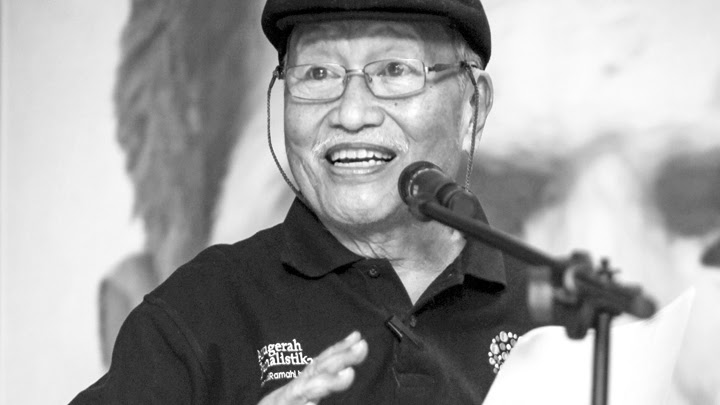
After canceling several meetings, we finally managed to tell Mr. Tides our big plan in the living room of his house one evening in early 2019. Mr. Tides seemed enthusiastic about the presentation we gave. "Let's make something big!". To his wife, Mr. Tides said that he was personally interested in the dreams of the three handsome young men that night. Even though we are not young anymore, he still calls us youth. "Yes, because you are much younger than me," he joked. The meeting was then closed with an intimate dinner. Not only was the home cooking delicious, but the discussion also left a deep impression – at least – for me personally. How come? I only knew Mr. Tides as a senior journalist who was the editor of the Sinar Harapan daily, which was last banned by the New Order regime in October 1986. I also knew him because he read his books entitled "80 Years of Bung Karno" and "Uncovering the Haze of Halim 1965" while in college. Before. When I was in college, I also knew him as one of the founders of AJI (Alliance of Independent Journalists), which at that time was known to be brave enough to oppose the New Order regime. That is all. The rest, I only heard Maesa's story when she provoked Maesa to build an art space or "cultural center" in Surabaya. It was a crazy and tantalizing idea, which finally led the three of us to sit down at his home dinner table with him that night.
We went home happily with Mr. Tides' willingness to become the foundation's founder. We also immediately processed the idea of forming this foundation as quickly as we could legally formally. Don't forget to invite some friends to complete the foundation structure as one of the legal requirements. Mas Danang Harito Wibowo, Mas Risman Sjarief, and Ms. Alexandra Bastedo are figures we feel are appropriate to be in the structure. After several meetings, we managed to get a draft notary deed signed. The big moment we have been waiting for has arrived, so our hearts cheered. The first step, of course, is to contact Mr. Tides again to sign the deed. Mr. Tides' enthusiasm is no less high. However, he cannot escape the pain he is suffering from. After several changes to the schedule, we finally agreed to sign it on Thursday, September 26, 2019. However, the plan had to be postponed because Maesa received news that she had to be taken to the hospital. On Sunday, September 29, 2019, he passed away.
Still feeling sad and disappointed, the three of us changed the foundation's structure according to the existing situation and conditions. This foundation must remain standing for various reasons, one of them, in memory of Mr. Tides himself. On December 7, 2019, I left for Surabaya to sign some documents by train and then returned to Jakarta. Not long after, that year turned, and suddenly the world was hit by a terrible Covid19 pandemic, and since then, this foundation has not done anything for several months. After (back to) a lengthy discussion, the strategy also needs to be changed. As Mr. Tides said, "We have to be adaptive to the times. If you have to change, don't be afraid to change….". Without realizing it, we arrived at this point: holding a celebration for 2 years since the founding of the Senadi foundation while observing the ongoing project process. Project? Yes, Senadi managed to paddle his oars for the first time into the vast ocean. Uniquely, Senadi started its first voyage from Sampit (Central Kalimantan), not Surabaya. Even more unique, Sampit and Surabaya are located in a straight line 90˚ perpendicular to the map. If Senadi wanted to dwell in the urban youth culture scene at first, it all started with forests and rivers. Accidental? I don't believe in coincidence.
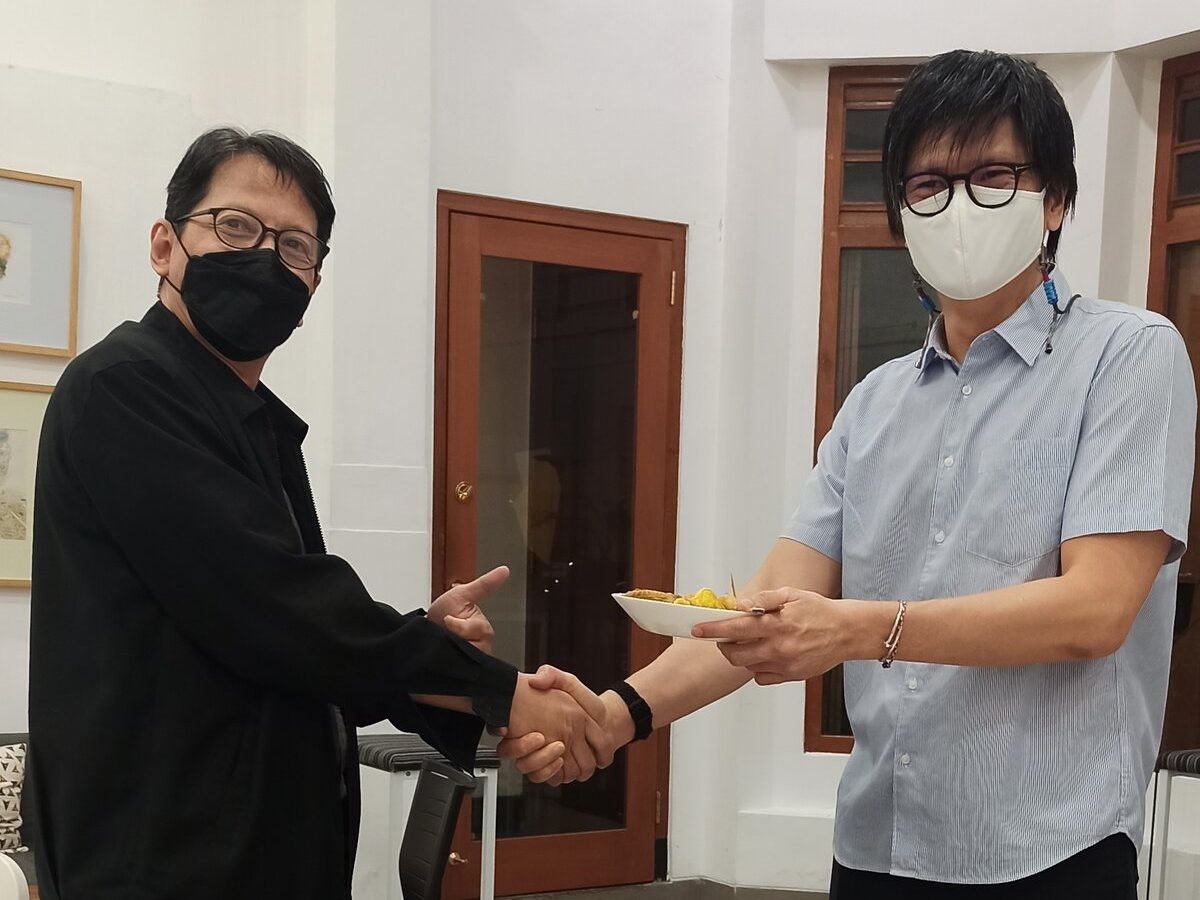
Happy birthday Senadi. Grow up and be salt to the world. Thank you Mr Tides. Without you, we would never have gotten to where we are now. Devoted voluntarily, to our homeland.
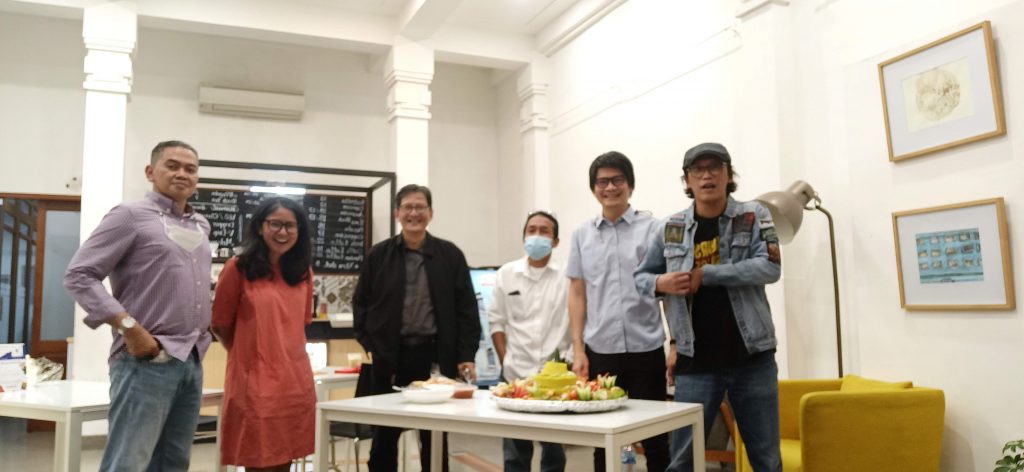
Yuka Dian Narendra
(Chairman of the SENADI Foundation)
Bintaro, South Jakarta,
November 11, 2021.